 LexioLearn

50 Spanish Phrases You’ll Actually Use Every Day
Learn 50 useful Spanish phrases for greetings, questions, shopping, eating out, and daily conversations, with English translations.
Learn 40 essential Spanish words and phrases for the supermarket, with English meanings, shopping expressions, and a simple dialogue.

Going grocery shopping is a great way to practise Spanish in real life. Whether you live in Spain, travel to a Spanish-speaking country, or just want to build your vocabulary, a few supermarket words make shopping much easier.
From fruit and vegetables to dairy and everyday items, this guide gives you 40 useful Spanish words and phrases for your next shopping trip.
Every Spanish noun is masculine or feminine. El goes with masculine words (el queso) and la goes with feminine words (la leche). The plurals are los and las: los huevos, las manzanas. Learn each word together with its article, and you will remember the gender for free.
One small surprise: el agua (water) is feminine, even though it uses el. Just say el agua fría, but las aguas.
These words are useful to learn first. You will see them in almost every supermarket.
In Spain, people say patata for potato. In Latin America, the usual word is papa. Plátano is a banana in Spain, but in some Latin American countries you will hear banana, and plátano can mean a plantain.
Example: Quiero comprar tomates y patatas. — I want to buy tomatoes and potatoes.
These words help you find basic ingredients for breakfast, lunch, and dinner.
Example: ¿Dónde está la leche? — Where is the milk?
You may need these when you do your regular shopping.
In Spain, juice is zumo. In many Latin American countries, people say jugo.
Product names help, but you also need a few phrases to talk to staff.
Here are a few more expressions for buying food.
For example: Quiero un kilo de manzanas, por favor. — I would like one kilogram of apples, please.
Let’s see how these words work in a real situation.
Customer: Buenos días. ¿Dónde está la leche?
Employee: Está en el pasillo número tres.
Customer: Gracias. ¿Y dónde puedo encontrar el arroz?
Employee: Está al lado de la pasta.
Customer: Perfecto. ¿Cuánto cuesta este queso?
Employee: Cuesta tres euros.
Customer: Muy bien. Me lo llevo.
Employee: ¿Necesita una bolsa?
Customer: Sí, por favor. ¿Puedo pagar con tarjeta?
Employee: Sí, claro.
Translation:
Customer: Good morning. Where is the milk?
Employee: It is in aisle number three.
Customer: Thank you. And where can I find the rice?
Employee: It is next to the pasta.
Customer: Perfect. How much does this cheese cost?
Employee: It costs three euros.
Customer: Very good. I’ll take it.
Employee: Do you need a bag?
Customer: Yes, please. Can I pay by card?
Employee: Yes, of course.
The easiest way to remember new words is to use them often. Next time you go grocery shopping, try to name five products in Spanish. You can also write your shopping list in Spanish.
Books, series breakdowns, and memes for language learners. Materials are shared with permission or link to authorised sources.
Learn 50 useful Spanish phrases for greetings, questions, shopping, eating out, and daily conversations, with English translations.
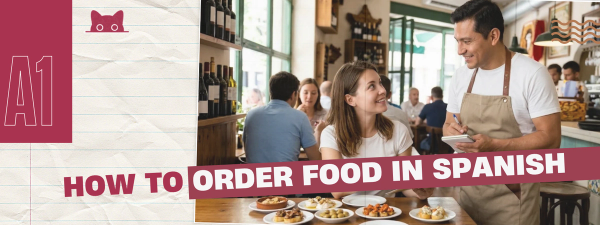
Learn useful Spanish phrases for ordering food, asking about ingredients, and paying the bill, with real-life restaurant dialogues.

Learn 40 useful Spanish sentences to talk about your daily routine, with English translations, time expressions, and a short example text.
One short email with fresh words, phrases and free PDFs. No spam, unsubscribe anytime.