 LexioLearn

50 Spanish Phrases You’ll Actually Use Every Day
Learn 50 useful Spanish phrases for greetings, questions, shopping, eating out, and daily conversations, with English translations.
Learn 40 useful Spanish sentences to talk about your daily routine, with English translations, time expressions, and a short example text.
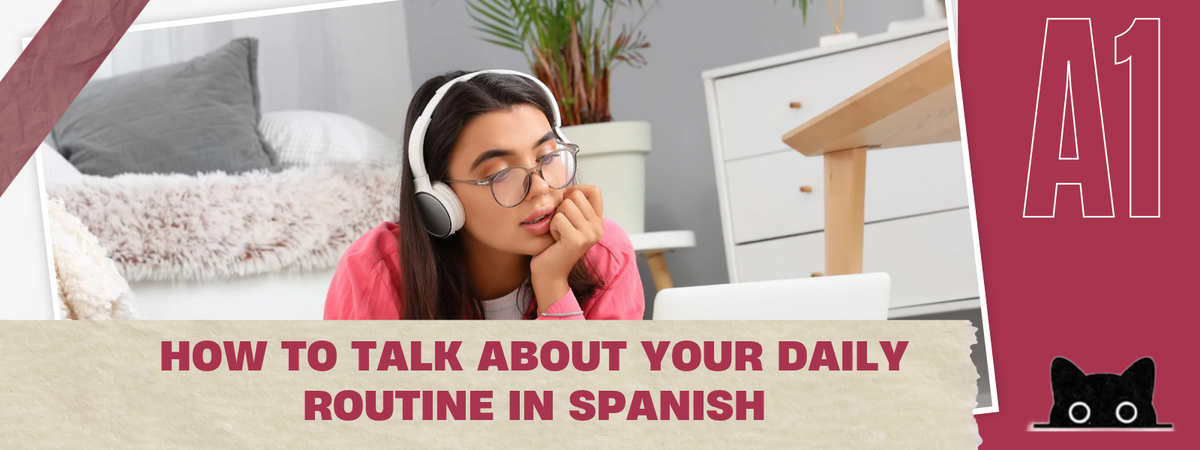
Talking about your daily routine is one of the easiest ways to start speaking Spanish. You can say when you wake up, what you eat for breakfast, where you work, and what you do in the evening.
These everyday sentences will help you build your own sentences and feel more confident.
In this guide, you will find 40 useful Spanish sentences, a short explanation of reflexive verbs, and a short text about a typical day.
Many routine verbs are reflexive. That means the action goes back to the person who does it. In Spanish, these verbs come with a small word: me, te, or se.
In English we say “I shower”, but in Spanish you say Me ducho, “I shower myself”. In the lists below, every sentence with me is a reflexive verb. Learn the whole sentence, and the pattern will become natural.
Let’s start with the morning. These sentences describe what many people do after waking up.
Useful verbs:
These sentences are useful when you talk about your job, school, or daily duties.
After work or school, there is usually time for meals, errands, and free time.
In Spain, la comida is lunch, the main meal of the day. In many Latin American countries, people say el almuerzo for lunch, and comida can mean food or a meal in general. Quedo con mis amigos is typical in Spain; in Latin America you will often hear Salgo con mis amigos.
Here are some useful sentences for the end of the day.
Time expressions make your sentences more natural and show when something happens.
For example: Normalmente me levanto a las siete, pero los fines de semana me levanto más tarde. — I usually get up at seven, but on weekends I get up later.
Now let’s put everything together in a short text.
Mi día
Normalmente me despierto a las siete de la mañana. Me levanto, me ducho y preparo el desayuno. Después, tomo un café y voy al trabajo.
Empiezo a trabajar a las nueve y termino a las cinco. Por la tarde, vuelvo a casa y preparo la cena. A veces salgo a caminar o leo un libro.
Por la noche, ceno con mi familia, veo una película y me relajo. Finalmente, me lavo los dientes y me acuesto a las diez y media.
English translation:
My Day
I usually wake up at seven in the morning. I get up, take a shower, and prepare breakfast. Then I have a coffee and go to work.
I start working at nine and finish at five. In the afternoon, I return home and prepare dinner. Sometimes I go for a walk or read a book.
In the evening, I have dinner with my family, watch a movie, and relax. Finally, I brush my teeth and go to bed at half past ten.
Try writing five sentences about your own day. Start with Me despierto..., Preparo el desayuno..., and Voy al trabajo...
Books, series breakdowns, and memes for language learners. Materials are shared with permission or link to authorised sources.
Learn 50 useful Spanish phrases for greetings, questions, shopping, eating out, and daily conversations, with English translations.
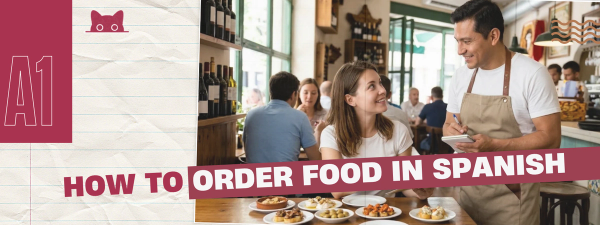
Learn useful Spanish phrases for ordering food, asking about ingredients, and paying the bill, with real-life restaurant dialogues.

Learn 40 essential Spanish words and phrases for the supermarket, with English meanings, shopping expressions, and a simple dialogue.
One short email with fresh words, phrases and free PDFs. No spam, unsubscribe anytime.