 LexioLearn


50 Spanish Phrases You’ll Actually Use Every Day
Learn 50 useful Spanish phrases for greetings, questions, shopping, eating out, and daily conversations, with English translations.
Practise 10 simple Spanish conversations with English translations and useful phrases. A beginner-friendly A1 guide for everyday situations.
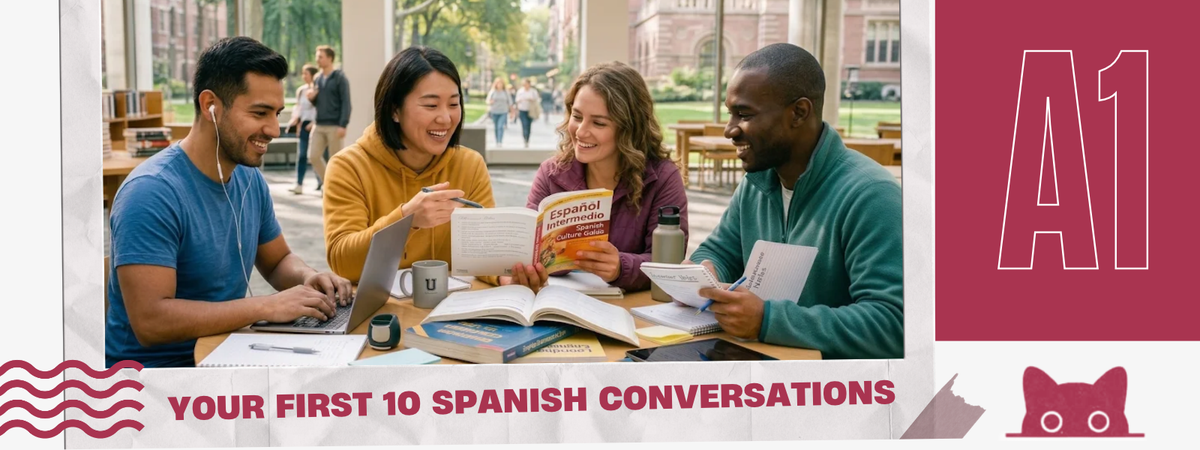
You have learned your first Spanish sentences and questions. Now it’s time to put them together.
In real life, people don’t speak in isolated sentences. They greet each other, ask questions, and respond. In this guide, you’ll see 10 short everyday conversations with English translations. Read each one aloud, and if possible, practise both roles.
A: ¡Hola! Me llamo Anna. ¿Cómo te llamas?
B: ¡Hola, Anna! Me llamo Carlos.
A: ¡Mucho gusto!
B: ¡Mucho gusto!
Hello! My name is Anna. What’s your name? / Hello, Anna! My name is Carlos. / Nice to meet you! / Nice to meet you too!
Mucho gusto means “much pleasure.” A man can also say Encantado, and a woman Encantada, for “delighted.”
A: ¿De dónde eres?
B: Soy de España. ¿Y tú?
A: Soy de Inglaterra.
B: ¡Qué interesante!
Where are you from? / I’m from Spain. And you? / I’m from England. / How interesting!
A: ¿Dónde vives?
B: Vivo en Madrid. ¿Y tú?
A: Vivo en Londres.
B: ¡Qué bien!
Where do you live? / I live in Madrid. And you? / I live in London. / Great!
A: ¿Qué idiomas hablas?
B: Hablo español e inglés. ¿Y tú?
A: Hablo inglés y un poco de español.
B: ¿Estás aprendiendo otro idioma?
A: Sí, estoy aprendiendo francés.
Which languages do you speak? / I speak Spanish and English. And you? / I speak English and a little Spanish. / Are you learning another language? / Yes, I’m learning French.
Spanish y (“and”) changes to e before a word that starts with an i sound: español e inglés.
A: ¿A qué te dedicas?
B: Soy estudiante. ¿Y tú?
A: Trabajo en una oficina.
B: ¿Qué estudias?
A: Estudio arquitectura.
What do you do for a living? / I’m a student. And you? / I work in an office. / What are you studying? / I’m studying architecture.
Estudiar is used for studying a subject, while aprender means learning in general: Estoy aprendiendo español.
A: ¿Qué te gusta hacer en tu tiempo libre?
B: Me gusta leer y escuchar música. ¿Y a ti?
A: Me gusta cocinar.
B: ¿Qué te gusta cocinar?
A: ¡La comida italiana!
What do you like doing in your free time? / I like reading and listening to music. And you? / I like cooking. / What do you like cooking? / Italian food!
A: Buenas tardes. ¿Qué desea?
B: Quisiera un café, por favor.
A: ¿Con leche?
B: Sí, con leche, por favor.
A: ¿Algo más?
B: No, gracias.
Good afternoon. What would you like? / I’d like a coffee, please. / With milk? / Yes, with milk, please. / Anything else? / No, thank you.
Quisiera... is a polite way to order. This dialogue uses usted (¿Qué desea?), which is right for café staff. Try it out loud before your next trip.
A: Disculpe, ¿dónde está la estación de tren?
B: La estación está allí, todo recto.
A: ¿Está lejos?
B: No, está a cinco minutos a pie.
A: ¡Muchas gracias!
B: ¡De nada!
Excuse me, where is the train station? / The station is over there, straight ahead. / Is it far? / No, it’s five minutes on foot. / Thank you very much! / You’re welcome!
In Latin America you will often hear todo derecho instead of todo recto. Both mean “straight ahead.”
A: Mañana vamos a la estación a las ocho.
B: Perdón, ¿puedes repetir, por favor?
A: Claro. Mañana vamos a la estación a las ocho.
B: ¡Ah, gracias! Ahora entiendo.
Tomorrow we’re going to the station at eight o’clock. / Sorry, can you repeat that, please? / Of course. We’re going to the station at eight o’clock. / Oh, thanks! Now I understand.
To give a time, use a las + the hour: a las ocho (at eight). For one o’clock, it is a la una.
A: ¿Tienes tiempo el sábado?
B: Sí, tengo tiempo. ¿Por qué?
A: ¿Quieres ir al cine?
B: ¡Sí, claro! ¿A qué hora?
A: ¿A las seis?
B: ¡Perfecto! ¡Hasta el sábado!
Are you free on Saturday? / Yes, I have time. Why? / Would you like to go to the cinema? / Yes, of course! At what time? / At six o’clock? / Perfect! See you on Saturday!
Al is a short form of a + el: ir al cine (to go to the cinema).
The best way to remember these dialogues is to imagine yourself in them, whether you’re in a café in Madrid or at a train station in Barcelona.
You don’t need to memorise all 10 conversations word for word. Focus on the expressions you can reuse: change the names, places, and drinks, and try to answer without looking at the English.
Books, series breakdowns, and memes for language learners. Materials are shared with permission or link to authorised sources.
Learn 50 useful Spanish phrases for greetings, questions, shopping, eating out, and daily conversations, with English translations.
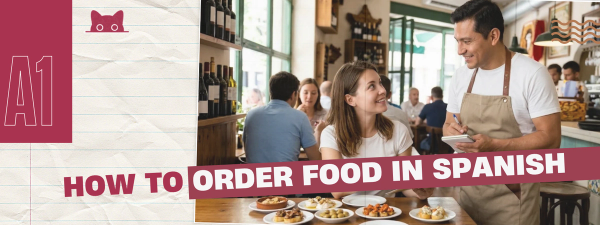
Learn useful Spanish phrases for ordering food, asking about ingredients, and paying the bill, with real-life restaurant dialogues.

Learn 40 essential Spanish words and phrases for the supermarket, with English meanings, shopping expressions, and a simple dialogue.
One short email with fresh words, phrases and free PDFs. No spam, unsubscribe anytime.