 LexioLearn
50 Spanish Phrases You’ll Actually Use Every Day
Learn 50 useful Spanish phrases for greetings, questions, shopping, eating out, and daily conversations, with English translations.
Learn 10 simple Spanish questions with English translations and pronunciation hints. Start conversations and practise everyday Spanish.
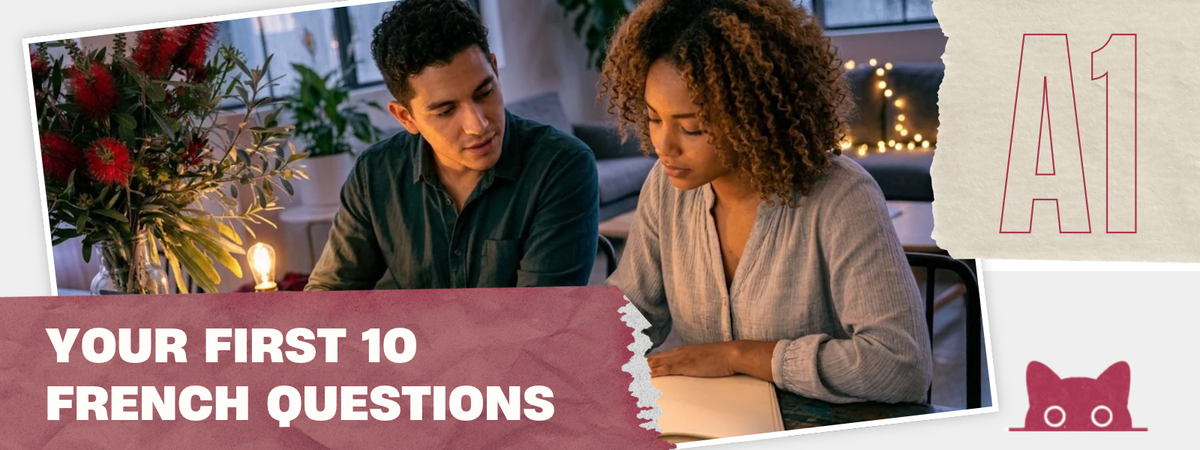
Want to start a conversation in Spanish? Learn how to ask simple questions.
These 10 beginner-friendly Spanish questions will help you get to know someone, ask for help, and communicate in everyday situations. Each question includes an English translation, a simple pronunciation guide, and a possible answer.
In writing, Spanish questions start with an upside-down question mark and end with a normal one: ¿Dónde vives? The first mark tells the reader a question is coming. Question words (cómo, dónde, qué, cuál) always have an accent mark and usually come first: ¿Dónde vives? For yes-or-no questions, the word order stays the same as in a statement, and your voice goes up at the end: Hablas inglés. (You speak English.) → ¿Hablas inglés? (Do you speak English?)
Pronunciation: KOH-moh teh YAH-mahs
Answer: Me llamo Anna. — My name is Anna.
Tú is the informal “you,” used with friends, family, and people you know well. Here it is hidden inside te.
Pronunciation: deh DOHN-deh EH-rehs
Answer: Soy de España. — I’m from Spain.
Don’t mix up ¿Dónde? (where) and ¿De dónde? (where from). De dónde asks about someone’s origin.
Pronunciation: DOHN-deh VEE-vehs
Answer: Vivo en Londres. — I live in London.
This is a different question from the previous one, because someone can come from one country and live in another.
Pronunciation: KOH-moh ehs-TAHS
Answers: Estoy bien. — I’m well. Más o menos. — So-so.
Spanish has two verbs for “to be.” Ser is for who you are and where you’re from (Soy de España). Estar is for how you feel and where something is (Estoy bien).
Pronunciation: keh ee-DYOH-mahs AH-blahs
Answer: Hablo inglés y un poco de español. — I speak English and a little Spanish.
Idiomas is the plural of idioma (language).
Pronunciation: ah KEH teh deh-DEE-kahs
Answers: Soy estudiante. — I’m a student. Trabajo en una oficina. — I work in an office.
You can also ask ¿En qué trabajas? — What do you work as?
Pronunciation: keh teh GOOS-tah ah-SEHR
Answers: Me gusta leer. — I like reading. Me gusta cocinar. — I like cooking.
Gusta literally means “is pleasing.” Use Me gusta + a verb to say what you enjoy doing.
Pronunciation: TYEH-nehs ehr-MAH-nohs
Answers: Sí, tengo un hermano. — Yes, I have a brother. No, soy hijo único / hija única. — No, I’m an only child (male / female).
Hermanos can mean “brothers” or “brothers and sisters” together, so it works as “siblings.”
Pronunciation: PWEH-dehs ah-yoo-DAR-meh
Answers: ¡Claro! — Of course! Sí, con gusto. — Yes, gladly.
After puedes, the second verb stays in its basic form: ayudar. The small word me (me) is attached to the end: ayudarme.
Pronunciation: PWEH-dehs reh-peh-TEER por fah-VOR
One of the most useful questions for beginners. You can also say ¿Perdón? (Pardon?) or ¿Puedes hablar más despacio? (Can you speak more slowly?)
Spanish has two ways to say “you” for one person. Tú is informal (friends, family, people you know well), and usted is formal (strangers, older people, shops, work). The verb changes too: ¿Cómo te llamas? becomes ¿Cómo se llama usted?, and ¿Puedes ayudarme? becomes ¿Puede ayudarme? If you’re unsure, usted is the safer choice, although in many places people switch to tú quickly.
You now know 10 useful questions for everyday conversations. You don’t need to memorise every grammar rule before using them. Start by recognising these expressions and noticing how Spanish speakers use them.
One more question is worth learning right away: ¿Cómo se dice “fine” en español? — How do you say “fine” in Spanish? Whenever you get stuck on a word, this question is your best friend.
Churro is a small orange cat in Madrid. He practises his questions on a pigeon in the square. “¿Cómo te llamas?” “Paloma.” “¿De dónde eres?” “De aquí.” “¿Dónde vives?” “Aquí.” “¿Tienes hermanos?” “Sí, muchos.”
Paloma looks up. A hundred pigeons look back. Churro decides to ask about siblings a little less often.
Learn 50 useful Spanish phrases for greetings, questions, shopping, eating out, and daily conversations, with English translations.
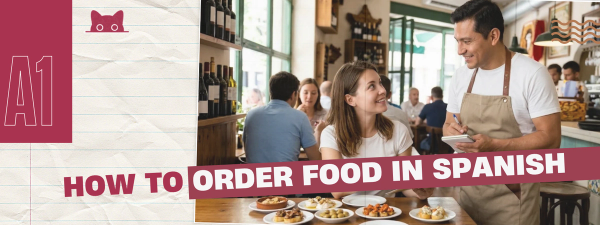
Learn useful Spanish phrases for ordering food, asking about ingredients, and paying the bill, with real-life restaurant dialogues.

Learn 40 essential Spanish words and phrases for the supermarket, with English meanings, shopping expressions, and a simple dialogue.
One short email with fresh words, phrases and free PDFs. No spam, unsubscribe anytime.