 LexioLearn


50 Spanish Phrases You’ll Actually Use Every Day
Learn 50 useful Spanish phrases for greetings, questions, shopping, eating out, and daily conversations, with English translations.
Learn German accusative pronouns (mich, dich, ihn, sie, es, uns, euch) with a simple list, examples, and common mistakes.
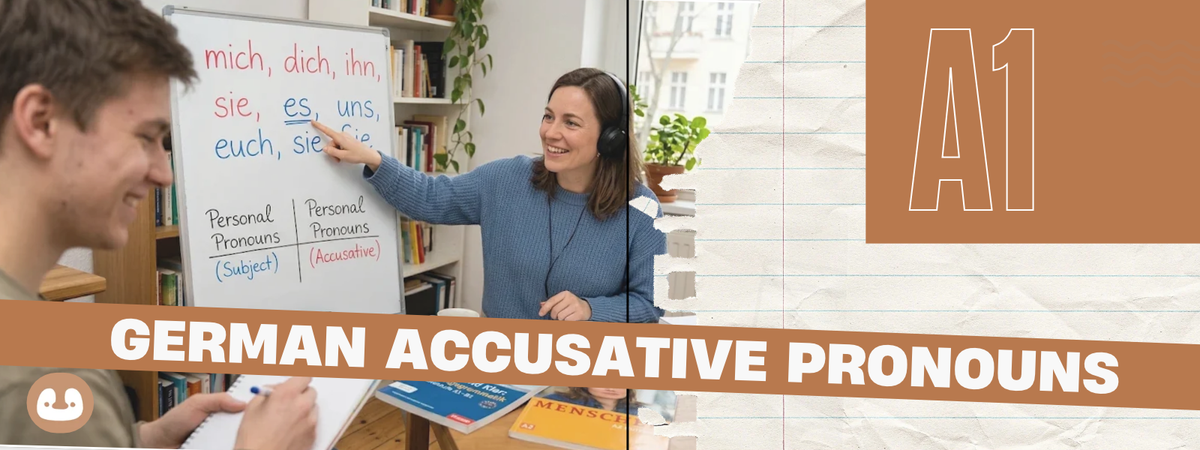
To say me, you, him, or her in German, you need the accusative pronouns. They replace a noun that is the direct object (the one who receives the action).
Ich sehe den Mann. — I see the man.
Ich sehe ihn. — I see him.
To find the object, ask Wen? (whom?) or Was? (what?). Wen sehe ich? — den Mann. Now replace it with ihn.
The five forms that really change are mich, dich, ihn, uns, and euch. Learn those first. Sie and es stay the same, and the meaning of sie / Sie depends on context and capital letters.
In a main clause, the pronoun comes after the verb: Ich sehe dich. Sie kennt ihn. Wir besuchen sie.
Pronouns usually come before nouns: Ich gebe das Buch meinem Bruder. → Ich gebe es meinem Bruder. With two pronouns, the accusative comes first: Ich gebe es ihm.
Remember mich – dich – ihn – uns – euch. They are the ones that look different, so they need the most practice.
Books, series breakdowns, and memes for language learners. Materials are shared with permission or link to authorised sources.
Learn 50 useful Spanish phrases for greetings, questions, shopping, eating out, and daily conversations, with English translations.
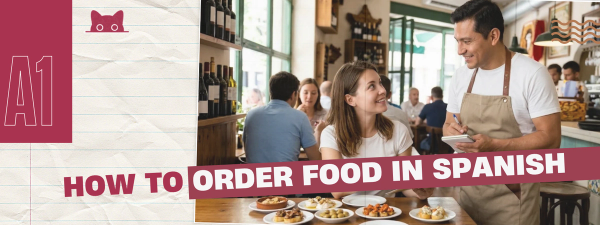
Learn useful Spanish phrases for ordering food, asking about ingredients, and paying the bill, with real-life restaurant dialogues.

Learn 40 essential Spanish words and phrases for the supermarket, with English meanings, shopping expressions, and a simple dialogue.
One short email with fresh words, phrases and free PDFs. No spam, unsubscribe anytime.