 LexioLearn
50 Spanish Phrases You’ll Actually Use Every Day
Learn 50 useful Spanish phrases for greetings, questions, shopping, eating out, and daily conversations, with English translations.
Discover 10 practical language-learning tips inspired by polyglot Kató Lomb. Learn how to build vocabulary, improve listening, and stay motivated.

Learning a new language can feel overwhelming. Unfamiliar words, grammar rules, and the fear of making mistakes can make it difficult to stay motivated. But successful language learning doesn’t have to depend on natural talent.
Hungarian translator and author Kató Lomb, widely known for her polyglot abilities, believed that curiosity, persistence, and the right approach could make a real difference. In her book Polyglot: How I Learn Languages, she shared ideas that remain useful for independent learners today.
Here are ten tips inspired by her approach.
Consistency matters more than occasional bursts of enthusiasm. Even ten minutes of reading, listening, or reviewing vocabulary can help you maintain contact with a language.
Make learning a regular habit instead of waiting until you feel motivated.
You don’t have to force yourself through the same activity every day. If grammar exercises feel tedious, try reading a story. If reading becomes tiring, listen to a podcast or watch a video in your target language.
Variety can help you stay interested while developing different skills.
Memorising isolated vocabulary doesn’t always teach you how to use it naturally.
Instead of learning decision alone, remember expressions such as make a decision or a difficult decision. Sentences and common word combinations show you how vocabulary works in real communication.
Reading can introduce you to new vocabulary, sentence structures, and ways of expressing ideas.
Start with short stories, accessible articles, or simplified books. Choose topics that genuinely interest you, whether they’re travel, mysteries, entertainment, or everyday life.
You don’t need to understand every word to benefit from reading.
Reading helps you recognise words, while listening teaches you how they sound in natural speech.
Podcasts, interviews, videos, and news broadcasts can all help you become more familiar with a language. Repeated listening also makes it easier to recognise words you already know when they’re spoken aloud.
Mistakes are a normal part of learning, but reviewing them helps you improve.
When you notice an error, compare your sentence with the correct version and try to understand the difference. Pay attention to recurring problems instead of treating every mistake as a failure.
The goal is progress, not perfection.
Writing gives you time to think about grammar, vocabulary, and sentence structure. You can write a short summary, describe your day, or translate a few simple sentences.
These activities help you move beyond recognising words to using them yourself.
A language is much more than a textbook. Books, films, podcasts, articles, conversations, and grammar references expose you to different aspects of communication.
Kató Lomb’s approach encouraged learners to engage with a language from several directions rather than rely on one method alone.
Choose resources that complement one another and suit your level.
Many learners postpone speaking because they are afraid of making mistakes. But waiting until you know enough grammar can prevent you from gaining practical experience.
Start with simple conversations about your hobbies, daily routine, or favourite films. Ask for corrections when possible, and treat feedback as a useful part of learning.

Progress can feel slow, especially when you compare yourself with other learners. You may forget vocabulary or struggle to understand something that seemed easy yesterday.
That doesn’t mean you lack the ability to learn. Notice the small changes: understanding more of a video, recognising a familiar expression, or forming a sentence more easily than before.
Persistence helps you keep moving forward.
Living in a country where a language is spoken can provide valuable opportunities to practise, but it doesn’t automatically make you fluent.
Active listening, meaningful conversations, reading, and regular study still matter. If travelling isn’t possible, you can create opportunities for language exposure at home through online content and conversations.
What matters is how actively you engage with the language.
Kató Lomb’s approach reminds us that language learning is not a race. Regular practice, interesting reading, active listening, and a willingness to learn from mistakes can all help you make progress.
Choose a language that interests you, find resources you enjoy, and keep going even when improvement feels gradual.
Books, series breakdowns, and memes for language learners. Materials are shared with permission or link to authorised sources.

Learn 50 useful Spanish phrases for greetings, questions, shopping, eating out, and daily conversations, with English translations.
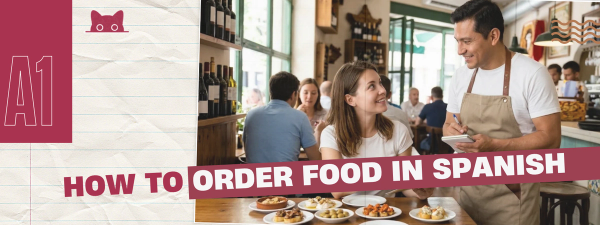
Learn useful Spanish phrases for ordering food, asking about ingredients, and paying the bill, with real-life restaurant dialogues.

Learn 40 essential Spanish words and phrases for the supermarket, with English meanings, shopping expressions, and a simple dialogue.
One short email with fresh words, phrases and free PDFs. No spam, unsubscribe anytime.