 LexioLearn

50 Spanish Phrases You’ll Actually Use Every Day
Learn 50 useful Spanish phrases for greetings, questions, shopping, eating out, and daily conversations, with English translations.
Learn 10 simple French sentences with English meanings and pronunciation hints. A beginner-friendly A1 guide for everyday situations.
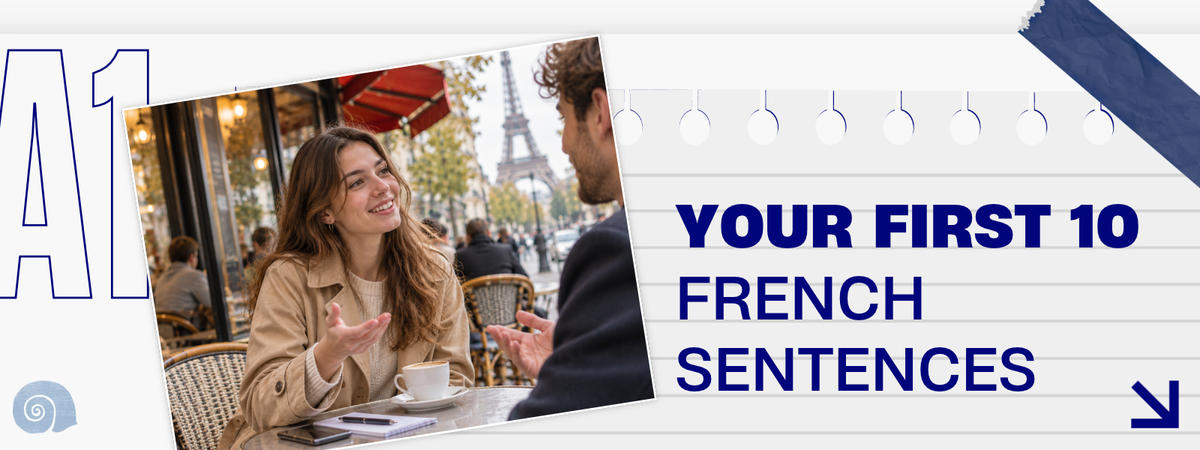
Learning French starts with simple sentences you can use in everyday life. You don’t need complicated grammar or hundreds of words to begin communicating.
In this beginner-friendly A1 guide, you’ll learn 10 useful French sentences, their English meanings, and simple pronunciation hints.
1. Bonjour ! — Hello!
Pronunciation: bohn-zhoor
Use bonjour to greet someone during the day. It works in shops, cafés, at school, and in many other situations.
2. Salut ! — Hi! / Bye!
Pronunciation: sah-lü
Salut is informal, so use it with friends, family, or people you know well. It can mean both “hi” and “bye.”
3. Je m’appelle… — My name is…
Pronunciation: zhuh mah-pell
Use this sentence to introduce yourself.
Example: Je m’appelle Emma. — My name is Emma.
4. Comment ça va ? — How are you?
Pronunciation: koh-mahn sah vah
One short email a week. No spam, unsubscribe anytime.
This is a common way to ask how someone is doing.
You can answer:
5. Je suis débutant(e). — I’m a beginner.
Pronunciation: zhuh swee day-bü-tahn(t)
This is useful when you’re learning French and want people to know your level.
Use débutant if you’re male and débutante if you’re female. The final t is generally not pronounced in the masculine form.
6. Je ne comprends pas. — I don’t understand.
Pronunciation: zhuh nuh kohm-prahn pah
Don’t worry about understanding everything. This sentence helps you ask someone to explain or repeat something.
In everyday spoken French, you may also hear Je comprends pas, with ne omitted.
7. Vous pouvez répéter, s’il vous plaît ? — Can you repeat that, please?
Pronunciation: voo poo-vay ray-pay-tay, seel voo pleh
Use this polite question when you haven’t heard or understood something.
Vous is polite and is also used when speaking to more than one person.
8. Merci beaucoup. — Thank you very much.
Pronunciation: mehr-see boh-koo
A simple and friendly way to express gratitude.
You can reply to merci with De rien — “You’re welcome.”
9. S’il vous plaît. — Please.
Pronunciation: seel voo pleh
Use this polite expression when making a request.
With friends or family, you can use the informal version: s’il te plaît.
10. Au revoir ! — Goodbye!
Pronunciation: oh ruh-vwahr
Use au revoir when leaving a shop, finishing a conversation, or saying goodbye to someone you may see again.
You don’t need to speak perfectly from day one. Start with a few useful expressions, learn when to use them, and gradually build your confidence.
My own interest in French grew partly through French-language entertainment, including Miraculous: Tales of Ladybug & Cat Noir. Stories, characters, and familiar scenes can make a new language feel more approachable and enjoyable.
Books, series breakdowns, and memes for language learners. Materials are shared with permission or link to authorised sources.
Learn 50 useful Spanish phrases for greetings, questions, shopping, eating out, and daily conversations, with English translations.
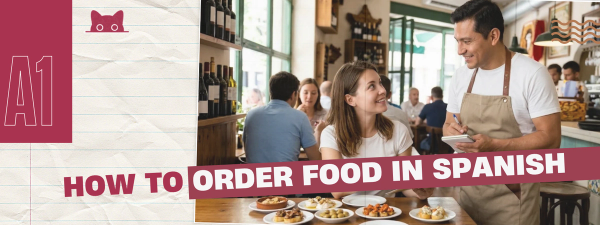
Learn useful Spanish phrases for ordering food, asking about ingredients, and paying the bill, with real-life restaurant dialogues.
Learn 40 essential Spanish words and phrases for the supermarket, with English meanings, shopping expressions, and a simple dialogue.
One short email with fresh words, phrases and free PDFs. No spam, unsubscribe anytime.