 LexioLearn
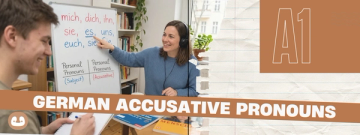


50 Spanish Phrases You’ll Actually Use Every Day
Learn 50 useful Spanish phrases for greetings, questions, shopping, eating out, and daily conversations, with English translations.
Learn the German accusative case with simple rules, article changes, example sentences, and common prepositions. A beginner-friendly guide.
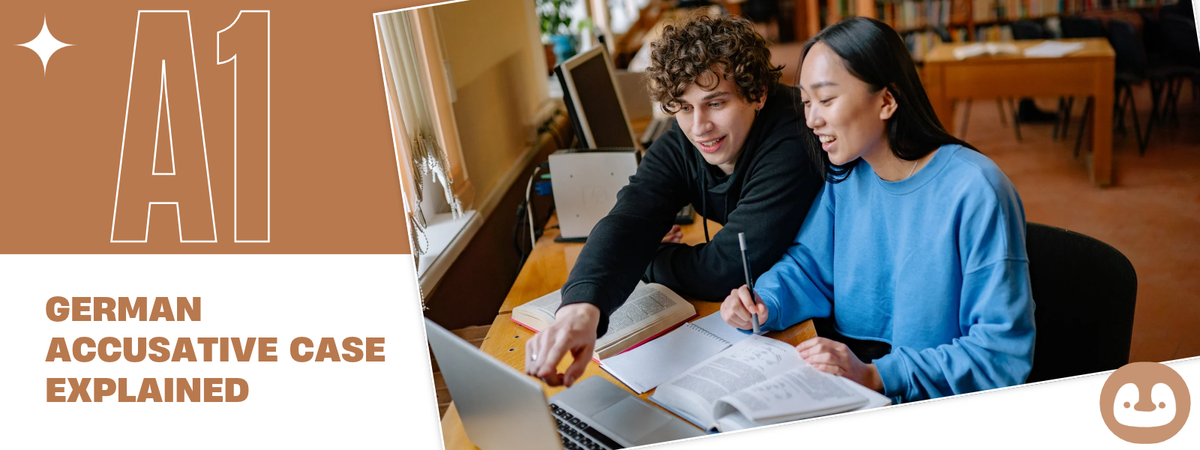
The German accusative case (Akkusativ) sounds scary, but the idea is simple: it marks the thing or person that receives the action. Grammar teachers call it the direct object.
Ich sehe den Mann. — I see the man.
Sie kauft einen Apfel. — She buys an apple.
Wir haben ein Auto. — We have a car.
In each sentence, the object answers the question Wen? (whom?) or Was? (what?). In this guide you’ll see how to spot it, which words change, and which prepositions need it.
The subject does the action, and the direct object receives it.
Der Mann kauft einen Kaffee. — The man buys a coffee.
Die Frau sieht den Mann. — The woman sees the man.
In the first sentence, der Mann is the subject. In the second, he becomes den Mann, because now he is the one being seen.
To find the accusative object, ask Wen? or Was? after the verb:
Good news: only the masculine changes.
The (definite article):
A / an (indefinite article):
Kein (no / not any) works the same way:
So if you only remember one thing: der → den, ein → einen, kein → keinen.
Pronouns change too: ich → mich, du → dich, er → ihn, wir → uns, ihr → euch. The forms es, sie, and Sie stay the same.
Er sieht mich. — He sees me.
Ich kenne dich. — I know you.
Wir besuchen sie. — We visit her / them.
Many everyday verbs take an accusative object:
Five common prepositions always need the accusative:
Notice the masculine article changes after each one: durch den Park, für den Mann, gegen den Wind. Learn these five as a group, and you’re set.
Some prepositions can take the accusative or the dative: an, auf, hinter, in, neben, über, unter, vor, zwischen.
A simple beginner rule:
Ich gehe in den Park. — I am going into the park.
Ich bin im Park. — I am in the park.
The first sentence describes a destination, so it uses the accusative. The second describes a place, so it uses the dative.
Example: Der Junge kauft einen Ball. The verb is kauft, the subject is der Junge, and the question Was kauft der Junge? gives einen Ball. It is masculine, so ein becomes einen.
Books, series breakdowns, and memes for language learners. Materials are shared with permission or link to authorised sources.
Learn 50 useful Spanish phrases for greetings, questions, shopping, eating out, and daily conversations, with English translations.
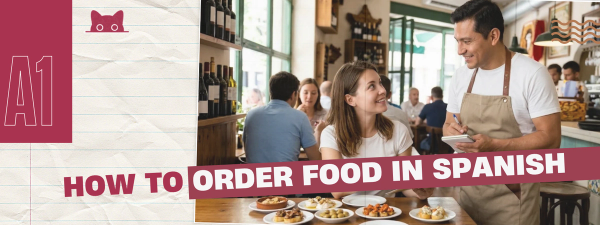
Learn useful Spanish phrases for ordering food, asking about ingredients, and paying the bill, with real-life restaurant dialogues.

Learn 40 essential Spanish words and phrases for the supermarket, with English meanings, shopping expressions, and a simple dialogue.
One short email with fresh words, phrases and free PDFs. No spam, unsubscribe anytime.