 LexioLearn


50 Spanish Phrases You’ll Actually Use Every Day
Learn 50 useful Spanish phrases for greetings, questions, shopping, eating out, and daily conversations, with English translations.
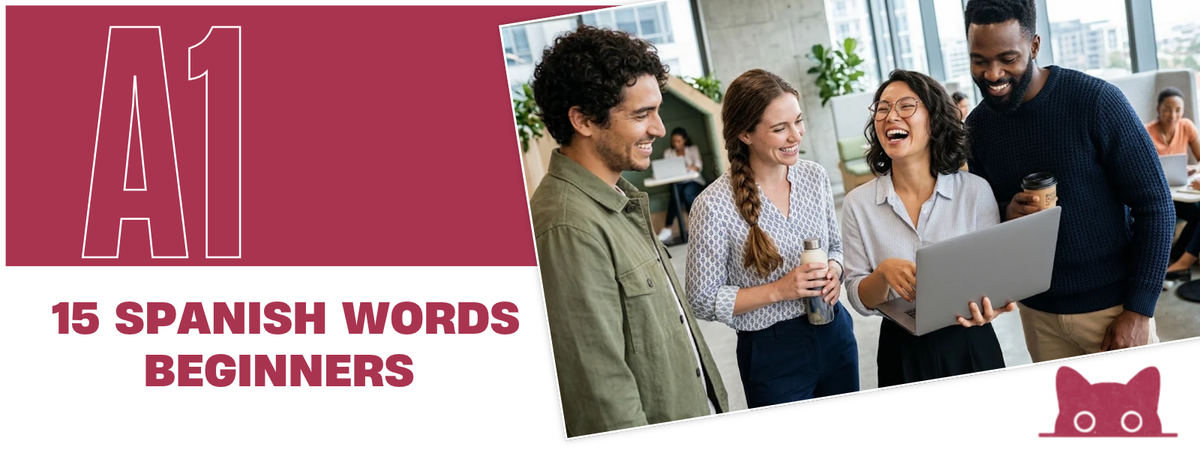
Learn how to pronounce 15 tricky Spanish words, including R and RR, J, B and V, and Ñ, with simple pronunciation guides and practice tips.
Spanish pronunciation looks easy at first, because most words are said the way they are written. But a few sounds are tricky, especially when they don’t exist in your own language.
The good news is that you don’t need a perfect accent to speak Spanish clearly. Learn a few rules, practise common words, and people will understand you.
Here are 15 Spanish words worth practising, with simple pronunciation guides.
These are simplified guides, not exact phonetic spelling. Pronunciation changes from country to country. In most of Spain, z and c before e or i sound like the English “th”: zanahoria becomes thah-nah-OH-ryah and gracias becomes GRAH-thyahs. In Latin America, people use the s sound. Both are correct. In Argentina, the ll in calle can sound like “sh” or “zh”.
One of the biggest differences is between R and RR.
A single R between vowels is a quick tap, a bit like the “tt” in American English “butter”. The double RR, and any R at the start of a word, is rolled.
Compare:
The difference is small, but it changes the meaning of the word.
Try these pairs too:
Don’t worry if rolling the R feels impossible at first. Many learners need weeks or months. Start slowly, say the tap version clearly, and keep practising.
The Spanish J is a strong, breathy sound, like a stronger English “h”. You will hear it in:
The letter G has the same sound before E and I:
Before A, O, and U, G is hard, like the “g” in “go”: gato (cat), goma (rubber), gusto (taste). To keep the hard sound before E and I, Spanish adds a silent U: guerra (war), guitarra (guitar). And when you see ü, as in vergüenza, you do say the U: ber-GWEN-sah.
In Spanish, B and V are the same sound:
So don’t use the English V, with your teeth on your lip. Say vino almost like “bino”. At the start of a word it is like an English B. Between vowels it is softer, and your lips barely touch.
The letter Ñ is a separate letter, not an N with a decoration. It sounds like “ny” in the English word “canyon”.
The small mark matters. Una means “a” or “one”, but uña means “fingernail”.
1. Listen to native speakers. Watch Spanish videos, listen to podcasts, or follow simple conversations.
2. Repeat words aloud. Choose five difficult words and say each one several times.
3. Practise similar sounds. Compare pero and perro to hear the difference.
4. Learn the five vowels. Spanish has five vowel sounds: A, E, I, O, and U. They almost always sound the same, which makes reading easier.
5. Record yourself. Listen to your voice and compare it with a native speaker.
Spanish pronunciation gets easier when you understand the basic sounds and repeat them often.
Start with a few words from this list, listen carefully, and say them aloud. Then move on to longer words and full sentences.
Books, series breakdowns, and memes for language learners. Materials are shared with permission or link to authorised sources.
Learn 50 useful Spanish phrases for greetings, questions, shopping, eating out, and daily conversations, with English translations.
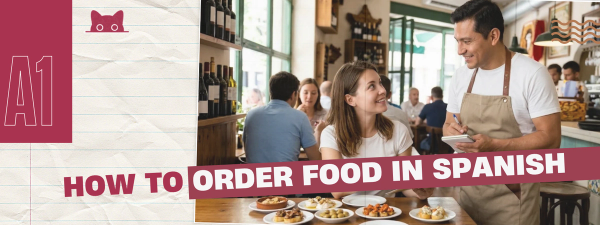
Learn useful Spanish phrases for ordering food, asking about ingredients, and paying the bill, with real-life restaurant dialogues.

Learn 40 essential Spanish words and phrases for the supermarket, with English meanings, shopping expressions, and a simple dialogue.
One short email with fresh words, phrases and free PDFs. No spam, unsubscribe anytime.