 LexioLearn
50 Spanish Phrases You’ll Actually Use Every Day
Learn 50 useful Spanish phrases for greetings, questions, shopping, eating out, and daily conversations, with English translations.
Practise 10 simple German conversations with English translations and useful phrases. A beginner-friendly A1 guide for everyday situations.
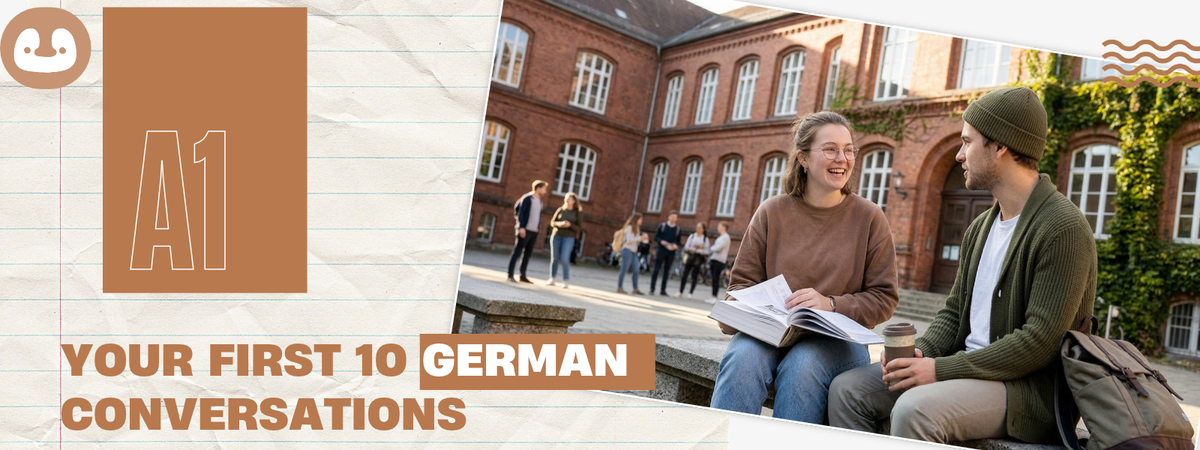
You have learned your first German sentences and questions. Now it’s time to put them together.
In real life, people don’t speak in isolated sentences. They greet each other, ask questions, and respond. In this guide, you’ll see 10 short everyday conversations with English translations. Read each one aloud, and if possible, practise both roles.
A: Hallo! Ich heiße Anna. Wie heißt du?
B: Hallo, Anna! Ich heiße Max.
A: Freut mich!
B: Freut mich auch!
Hello! My name is Anna. What’s your name? / Hello, Anna! My name is Max. / Nice to meet you! / Nice to meet you too!
Freut mich is short for Es freut mich, “I’m pleased.”
A: Woher kommst du?
B: Ich komme aus Spanien. Und du?
A: Ich komme aus Deutschland.
B: Ah, interessant!
Where are you from? / I come from Spain. And you? / I come from Germany. / Oh, interesting!
A: Wo wohnst du?
B: Ich wohne in Berlin. Und du?
A: Ich wohne in Hamburg.
B: Schön!
Where do you live? / I live in Berlin. And you? / I live in Hamburg. / Nice!
A: Welche Sprachen sprichst du?
B: Ich spreche Englisch und Spanisch. Und du?
A: Ich spreche Deutsch und ein bisschen Englisch.
B: Lernst du noch eine Sprache?
A: Ja, ich lerne Französisch.
Which languages do you speak? / I speak English and Spanish. And you? / I speak German and a little English. / Are you learning another language? / Yes, I’m learning French.
A: Was machst du beruflich?
B: Ich bin Studentin. Und du?
A: Ich arbeite in einem Büro.
B: Was studierst du?
A: Ich studiere Architektur.
What do you do for a living? / I’m a student. And you? / I work in an office. / What are you studying? / I’m studying architecture.
Studieren means studying at university, while lernen means learning in general: Ich lerne Deutsch.
A: Was machst du gern in deiner Freizeit?
B: Ich lese gern und höre Musik. Und du?
A: Ich koche gern.
B: Was kochst du gern?
A: Italienisches Essen!
What do you like doing in your free time? / I like reading and listening to music. And you? / I like cooking. / What do you like cooking? / Italian food!
A: Guten Tag! Was möchten Sie?
B: Ich hätte gern einen Kaffee, bitte.
A: Mit Milch?
B: Ja, mit Milch, bitte.
A: Sonst noch etwas?
B: Nein, danke.
Good day! What would you like? / I’d like a coffee, please. / With milk? / Yes, with milk, please. / Anything else? / No, thank you.
Ich hätte gern... is a polite way to order. This dialogue uses Sie, which is right for café staff.
I remember ordering meat in three languages at once, so a simple Ich hätte gern... would have made my life much easier. Try this dialogue out loud before your next trip.
A: Entschuldigung, wo ist der Bahnhof?
B: Der Bahnhof ist dort, geradeaus.
A: Ist es weit?
B: Nein, nur fünf Minuten zu Fuß.
A: Vielen Dank!
B: Gern geschehen!
Excuse me, where is the train station? / The station is over there, straight ahead. / Is it far? / No, only five minutes on foot. / Thank you very much! / You’re welcome!
A: Morgen fahren wir um acht Uhr zum Bahnhof.
B: Entschuldigung, kannst du das bitte wiederholen?
A: Natürlich. Wir fahren um acht Uhr zum Bahnhof.
B: Ah, danke! Jetzt verstehe ich.
Tomorrow we’re going to the station at eight o’clock. / Sorry, can you repeat that, please? / Of course. We’re going to the station at eight o’clock. / Oh, thanks! Now I understand.
A: Hast du am Samstag Zeit?
B: Ja, ich habe Zeit. Warum?
A: Möchtest du ins Kino gehen?
B: Ja, gern! Um wie viel Uhr?
A: Um sechs Uhr?
B: Perfekt! Bis Samstag!
Are you free on Saturday? / Yes, I have time. Why? / Would you like to go to the cinema? / Yes, gladly! At what time? / At six o’clock? / Perfect! See you on Saturday!
The best way to remember these dialogues is to imagine yourself in them, whether you’re in a café in Vienna or at a train station in Berlin.
You don’t need to memorise all 10 conversations word for word. Focus on the expressions you can reuse: change the names, places, and drinks, and try to answer without looking at the English.
Gut gemacht! — Well done!
Books, series breakdowns, and memes for language learners. Materials are shared with permission or link to authorised sources.
Learn 50 useful Spanish phrases for greetings, questions, shopping, eating out, and daily conversations, with English translations.
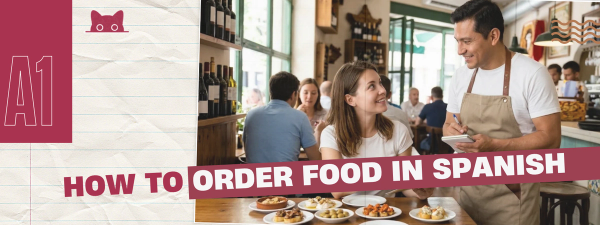
Learn useful Spanish phrases for ordering food, asking about ingredients, and paying the bill, with real-life restaurant dialogues.
Learn 40 essential Spanish words and phrases for the supermarket, with English meanings, shopping expressions, and a simple dialogue.
One short email with fresh words, phrases and free PDFs. No spam, unsubscribe anytime.